Practical workplace guidance
Offices, shops, workshops and warehouses in Cameroon and the wider region face different fire hazards. A practical fire risk assessment should reflect the building, materials, activities and people present—not simply reuse another organisation’s checklist.
Start by preventing ignition and fire spread
Identify heat sources, fuels and conditions that allow a fire to grow. Common concerns include damaged electrical equipment, overloaded connections, welding and cutting, combustible waste and poorly controlled flammable liquids.
Arrange competent inspection and repair of electrical faults. Keep combustible materials away from heat sources. Store flammable products appropriately, follow product safety information and manage hot work through a planned authorisation process with suitable precautions.
Where generators are used, follow manufacturer instructions, provide appropriate ventilation and separation, and prevent unsafe fuel storage or refuelling. Do not run fuel-burning generators inside occupied buildings or near openings where exhaust can enter.
Select extinguishers for the actual hazards
The correct extinguisher depends on the material burning, nearby equipment and the environment. Selection, placement and maintenance should be planned by a competent person.
Fire-class letters and colour conventions can vary by standard. Check the extinguisher’s rating, pictograms and instructions rather than relying on colour alone. Carbon dioxide also presents hazards in poorly ventilated spaces, and powder can impair visibility.
- Paper, timber and textiles: use equipment specifically rated for these ordinary solid combustibles.
- Flammable liquids: select an agent and rating suitable for the particular liquid and conditions; do not direct a water jet onto burning fuel.
- Energised electrical equipment: never use water or another unsuitable agent. Only isolate power if this can be done safely by an authorised person.
- Cooking oils and fats: specialist wet-chemical equipment may be required. Never throw water onto hot burning oil.
- Metals or other specialist hazards: require a specific assessment and compatible extinguishing media.
Evacuation takes priority over firefighting
On discovering a fire, raise the alarm, follow the site procedure and leave by a safe route. Make sure the designated person contacts the emergency services. Do not delay to collect belongings, enter smoke or return for equipment.
Extinguisher use should be limited to trained, authorised people, following the site plan, only where the fire is small, the equipment is suitable and a clear escape route remains available. If there is doubt, evacuate. Do not make workers feel obliged to fight a fire.
Make the evacuation plan usable for everyone
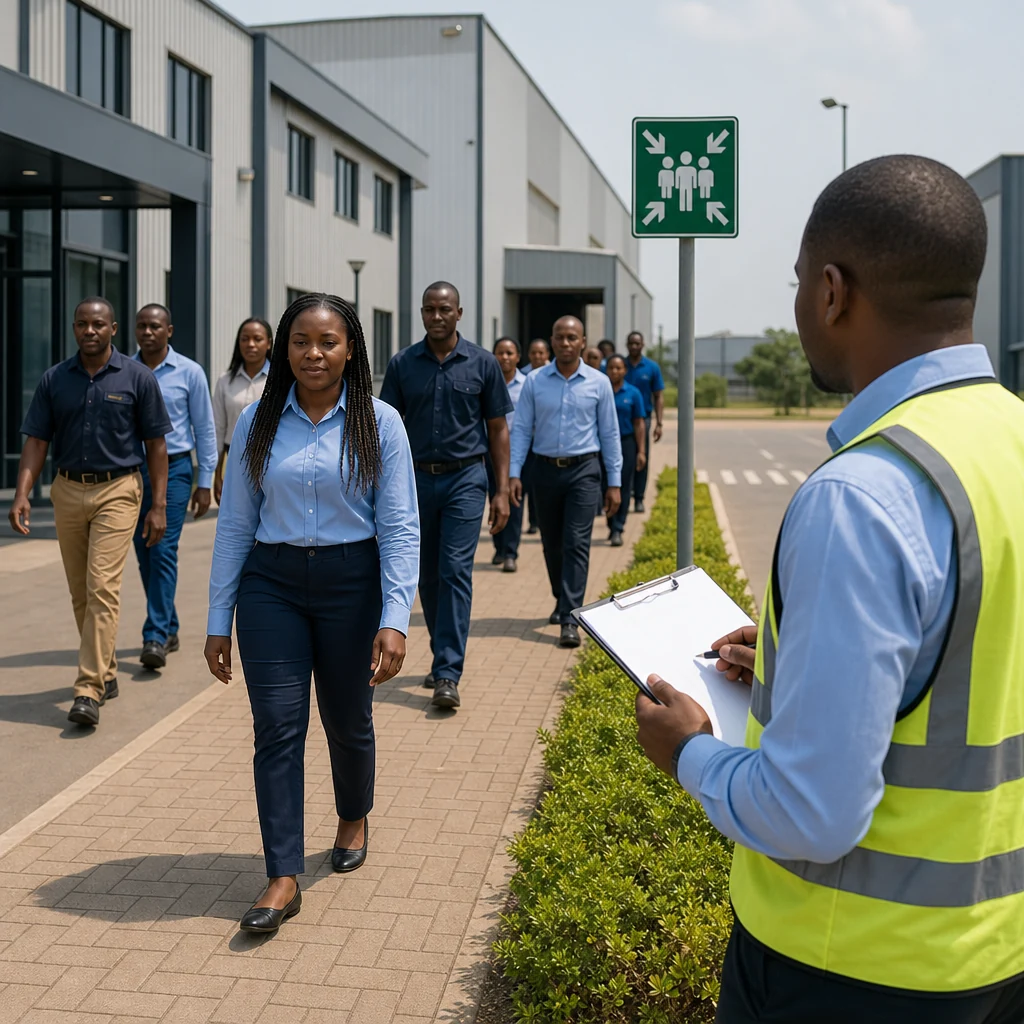
Identify escape routes, exits, an assembly point and arrangements for accounting for staff, visitors and contractors. Plan assistance for people who need it. Do not depend on an ordinary passenger lift for evacuation; any specialist evacuation lift needs a specific agreed procedure.
Train new arrivals and practise the plan through suitable drills. Review delays, blocked routes and communication failures. Do not treat a quick drill time as proof that every person can evacuate safely.
Practical example: a warehouse loading area
Stacked cartons restrict an emergency exit while delivery vehicles obstruct the assembly point. Moving an extinguisher does not solve either problem. Restore the exit route, protect the assembly area from traffic and check arrangements during an actual delivery period.
Strengthen fire safety with SQMI
Explore SQMI fire safety training and discuss training for your team. SQMI is based in Douala and serves employers and professionals across Cameroon, CEMAC and West Africa.
Ask about suitable training for your workplace.
Quick checklist
- Escape routes and exits are unobstructed.
- Fire doors are not improperly wedged open.
- Alarms, emergency lighting and equipment have appropriate checks and maintenance.
- Extinguishers are accessible and matched to the hazards.
- Emergency contacts, assembly arrangements and assistance needs are understood.
Common questions
- Can one extinguisher deal with every workplace fire?
- No. Equipment must match the hazards. Some agents can make a fire more dangerous or introduce additional risks.
- How often should a workplace practise evacuation?
- Set a programme based on the fire assessment, occupancy, work patterns and applicable local requirements. Include relevant shifts and review the plan when conditions change; do not assume one universal interval suits every site.
- Should everyone attempt to use an extinguisher?
- No. Everyone needs to understand the alarm and evacuation procedure. Firefighting duties require suitable training, equipment and clear limits.
Sources and further reading
This article is general guidance for awareness. Apply it through your own site-specific risk assessment and the laws and standards that apply where you work.