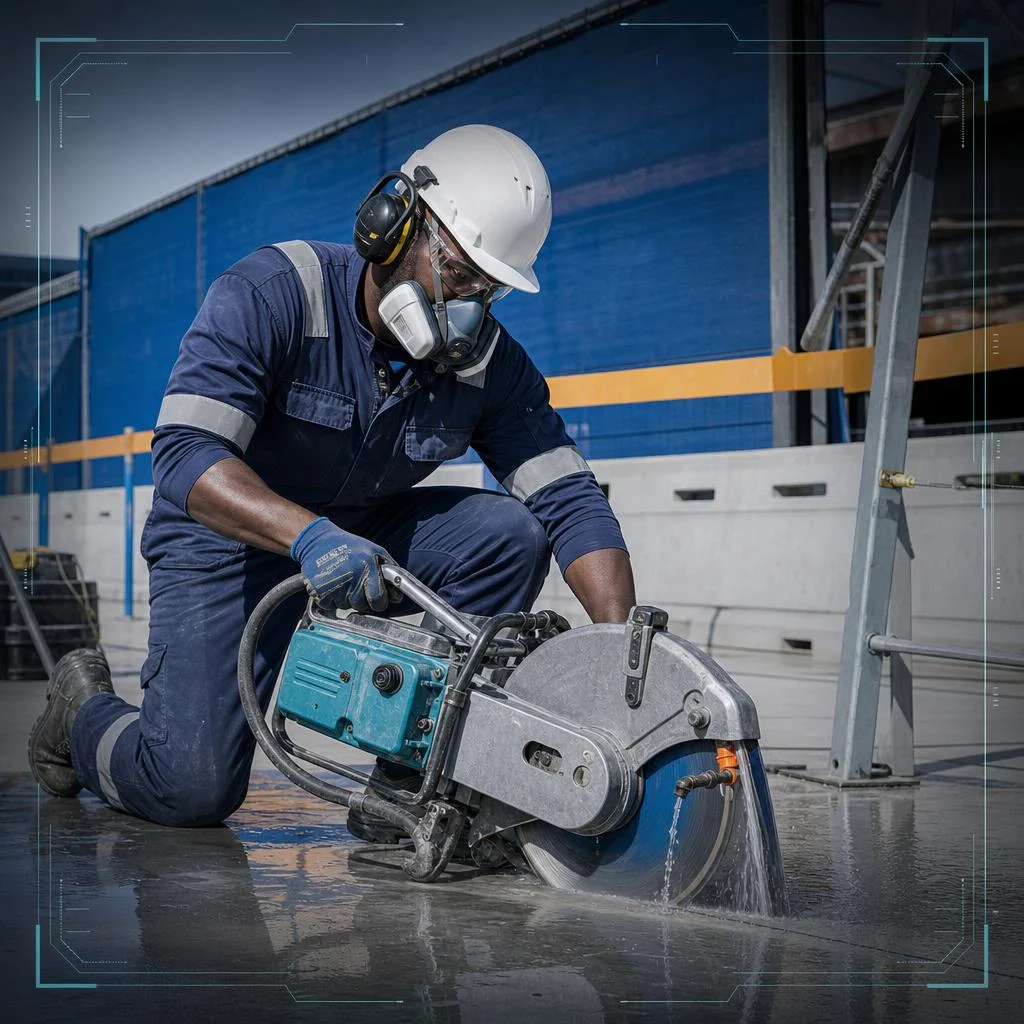
What makes silica dust dangerous?
Concrete, mortar, stone and many other construction materials contain crystalline silica. Cutting, grinding, drilling or breaking these materials can release very fine respirable particles. These can penetrate deep into the lungs, and harmful exposure is not always obvious from the amount of dust you can see.
Breathing respirable crystalline silica can cause silicosis and is associated with lung cancer and other serious disease. Silicosis is irreversible. Waiting for workers to develop symptoms is not a prevention strategy: control exposure before work starts.
On construction sites in Cameroon, the practical question is not simply whether a worker has a mask. It is whether the task has been assessed and a suitable combination of controls is working.
Identify high-dust tasks and everyone exposed
Review materials, supplier information, the tool, duration, location and people nearby. Concrete cutting, wall chasing, surface grinding, drilling and demolition deserve particular attention. Enclosed or poorly ventilated areas can make exposure harder to control.
Include helpers, cleaners, other trades and members of the public where relevant. A saw operator may be protected while a nearby worker breathes the same dust. Schedule and segregate work to prevent unnecessary exposure.
Do not use this article to identify unknown hazardous materials. Renovation and demolition may involve additional hazards, including asbestos; competent investigation and separate controls may be required before disturbance.
Control dust at source before relying on masks
First consider eliminating or reducing the dusty task through design changes, pre-cut materials or a less hazardous method. When cutting or grinding is necessary, select equipment with suitable dust controls and follow its instructions.
Wet methods must deliver adequate water to the point where dust is created, not just wet the ground afterwards. Plan water supply and slurry removal while controlling electrical, slip and environmental hazards. Use equipment designed for the method.
On-tool extraction should have compatible hoods, adequate airflow and a suitable dust extractor and filtration system. An ordinary domestic vacuum is not an appropriate substitute. Check hoses, seals and filters, and keep the hood correctly positioned. Combining controls may be needed.
Choose respiratory protection through the assessment
Some tasks still require respiratory protective equipment even with effective source controls. A competent assessment should determine the protection level, equipment type, suitability and maintenance arrangements. A loose surgical mask or an unspecified disposable mask is not a complete silica-control programme.
Tight-fitting respirators need an appropriate fit test for the selected model and size, plus a user seal check each time they are worn. Facial hair in the sealing area can prevent an effective seal. Seek a suitable alternative rather than accepting leakage.
Train workers in use, limits, storage, cleaning and filter replacement. Consider compatibility with eye and hearing protection, communication, heat and task demands. Respirators complement engineering controls; they do not justify uncontrolled dust generation.
Clean safely and verify that controls work
Avoid dry sweeping or compressed-air cleaning where these can put hazardous dust back into the air. Use an appropriate industrial vacuum or suitable wet cleaning, manage slurry before it dries and arrange safe waste handling.
Inspect controls during work, not only at the start of the day. Stop if water delivery, extraction or protective equipment fails. Visible dust escaping a control is a warning, but the absence of visible dust does not prove exposure is safe.
Competent exposure monitoring may be needed to verify performance or understand uncertain exposure. Arrange occupational-health advice and health surveillance where the assessment and applicable requirements indicate it; this does not replace controlling exposure.
International silica guidance can inform good practice, but foreign exposure limits and legal duties must not be presented as Cameroon law. Check local requirements, client standards and task-specific technical advice before deciding the work is adequately controlled.
Quick checklist
- Identify silica-containing materials and dust-producing tasks before work.
- Consider design changes and select suitable wet methods or extraction.
- Protect helpers and neighbouring trades through segregation and planning.
- Select, fit-test and maintain respiratory protection where required.
- Use safe housekeeping and verify control performance during the task.
Common questions
- Is silica dust harmful only when a large cloud is visible?
- No. Respirable particles can be too small to see clearly. Visible dust is a warning, but clear-looking air is not proof of safe exposure.
- Does a disposable mask make dry concrete cutting safe?
- No. Assess the task and control dust at source. Where respiratory protection is needed, select suitable equipment with appropriate fit testing, training and maintenance.
- Can we use a household vacuum to collect construction dust?
- Do not assume it is suitable. Use a competent selection of industrial extraction and filtration appropriate to the hazardous dust and task.
- Do workers still need checks when wet cutting is used?
- Yes. Check water delivery, operating method and residual exposure. Additional controls, respiratory protection or exposure monitoring may still be needed.
Sources and further reading
This article is general guidance for awareness. Apply it through your own site-specific risk assessment and the laws and standards that apply where you work.