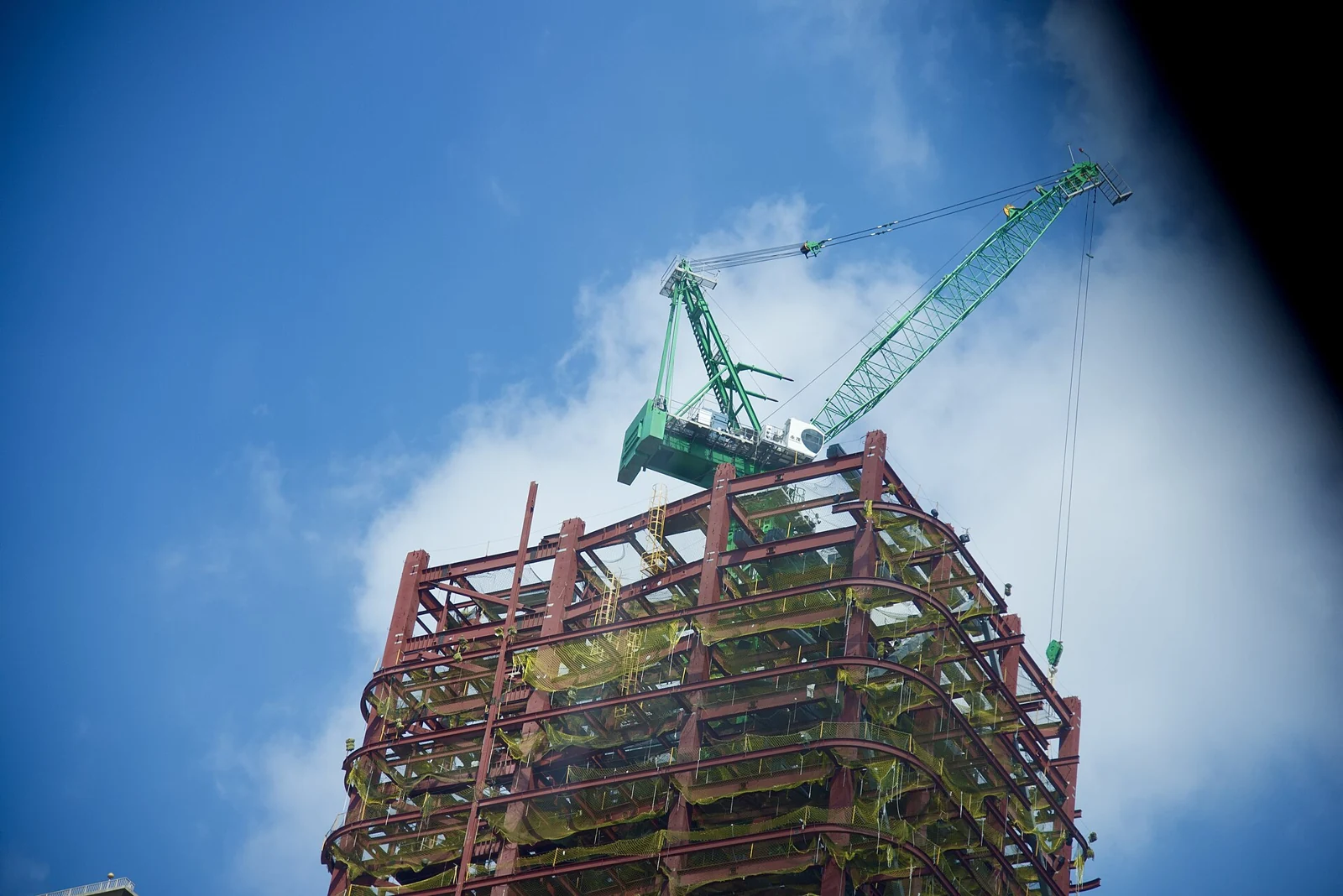
Four workers die following a collapse at Fab 22
Four workers died following an accident during steel-structure work at Taiwan Semiconductor Manufacturing Company’s Fab 22 construction site in Kaohsiung on 20 October 2026. The fourth worker died in hospital the following day, according to the Southern Taiwan Science Park Bureau, as reported by Taiwan’s Central News Agency. [T1]
The Taipei Times reported that a steel structure collapsed during hoisting and installation, causing the workers to fall. Preliminary accounts referred to a connection failure. The investigation must establish the failure sequence, the condition of the connections and the circumstances in which the workers were exposed. [T2]
CNA reported that steel-beam lifting at the site was suspended. TSMC also said it had voluntarily suspended steel-structure work at the Kaohsiung site and its new fab construction sites across Taiwan. These measures should not be described as a shutdown of all company operations. [T1]
Control stability throughout the erection sequence
A completed structure and a partly erected frame do not carry loads in the same way. Connections, temporary bracing and the sequence of assembly determine whether each intermediate stage remains stable. UK HSE guidance on steel erection calls for a sequential erection method developed with the frame designer or a structural engineer, with arrangements that maintain stability throughout construction. [T3]
For contractors erecting industrial buildings, warehouses or steel platforms in Cameroon and across West Africa, the review should cover:
- Engineered sequencing: identify the supports, connections and temporary works required before each stage proceeds.
- Connection checks: verify components and completion against the approved design and inspection plan; workers should not make unapproved site substitutions.
- Safe access: avoid work at height where practicable and provide suitable platforms and collective fall protection where it cannot be avoided.
- Lifting coordination: establish competent supervision, reliable communication and exclusion zones; do not lift loads over people.
- Rescue readiness: plan for a fall or structural instability without exposing additional workers to the same hazard.
Contractor supervision before work resumes
A restart decision should be based on engineering review, corrected work methods, verified controls and a workforce briefing—not the passage of time alone. The organisation commissioning the work and the erection contractor need a shared understanding of who authorises each stage and who can stop it.
SQMI’s safety training helps supervisors identify construction hazards and assess work arrangements. It does not replace structural design, specialist lifting competence or site-specific engineering approval.
Further verified information on this incident will be communicated through this article in due course. Safety and Quality Management Institute is committed to promoting the health and safety of workers around the world.
Quick checklist
- Has the erection sequence been approved by the responsible engineering team?
- Are temporary stability and connections checked before the next stage?
- Are safe access, lifting exclusion zones and rescue arrangements in place?
Common questions
- When did the TSMC Kaohsiung construction accident occur?
- The accident occurred on 20 October 2026. CNA reported on 21 October that the fourth worker had died, bringing the reported death toll to four.
- Has the cause of the TSMC construction accident been established?
- The cited reports describe a collapse during steel-structure work and preliminary information about a connection failure. The investigation must establish the failure sequence and underlying causes.
Sources and further reading
- [T1] CNA / Focus Taiwan, 21 October 2026 — Death toll in TSMC Kaohsiung construction accident rises to 4
- [T2] Taipei Times, with CNA, 21 October 2026 — Four dead after collapse at TSMC Kaohsiung site
- [T3] UK HSE — Steel erection
- Photo: SSJF01 / Wikimedia Commons — CC0
- Photograph licence: CC0 (resized, converted to WebP)

This article is general guidance for awareness. Apply it through your own site-specific risk assessment and the laws and standards that apply where you work.