Practical workplace guidance
Construction, building maintenance and telecommunications teams across Cameroon, CEMAC and West Africa need an approach that matches the task, the environment and the available equipment.
Use the right order: avoid, prevent, minimise
Avoid work at height where possible. Assemble components on the ground, use suitable extendable tools or bring equipment down for servicing.
If climbing cannot be avoided, prevent falls through a safe existing workplace, guardrails, properly designed platforms or suitable work-restraint systems. Prioritise protection that safeguards everyone using the area rather than relying only on individual behaviour.
Where a risk remains, minimise the distance and consequences of a fall with a properly designed system. Fall arrest is not a substitute for preventing the fall in the first place.
Choose equipment for the job—not what is nearest
Consider the height, task duration, tools, materials, ground conditions and access. A suitable scaffold or mobile elevating work platform may be more appropriate than a ladder for prolonged work or tasks requiring both hands and substantial force.
A ladder may be suitable for a low-risk, short-duration task where the assessment supports its use. Short duration alone does not make a dangerous location acceptable.
Check ladders and scaffolds before use
Inspect ladders for damage, missing parts, unsuitable repairs and contamination. Position and secure them according to their design and manufacturer instructions. Use stable support, maintain appropriate contact and avoid overreaching. Reposition the equipment instead of leaning farther out.
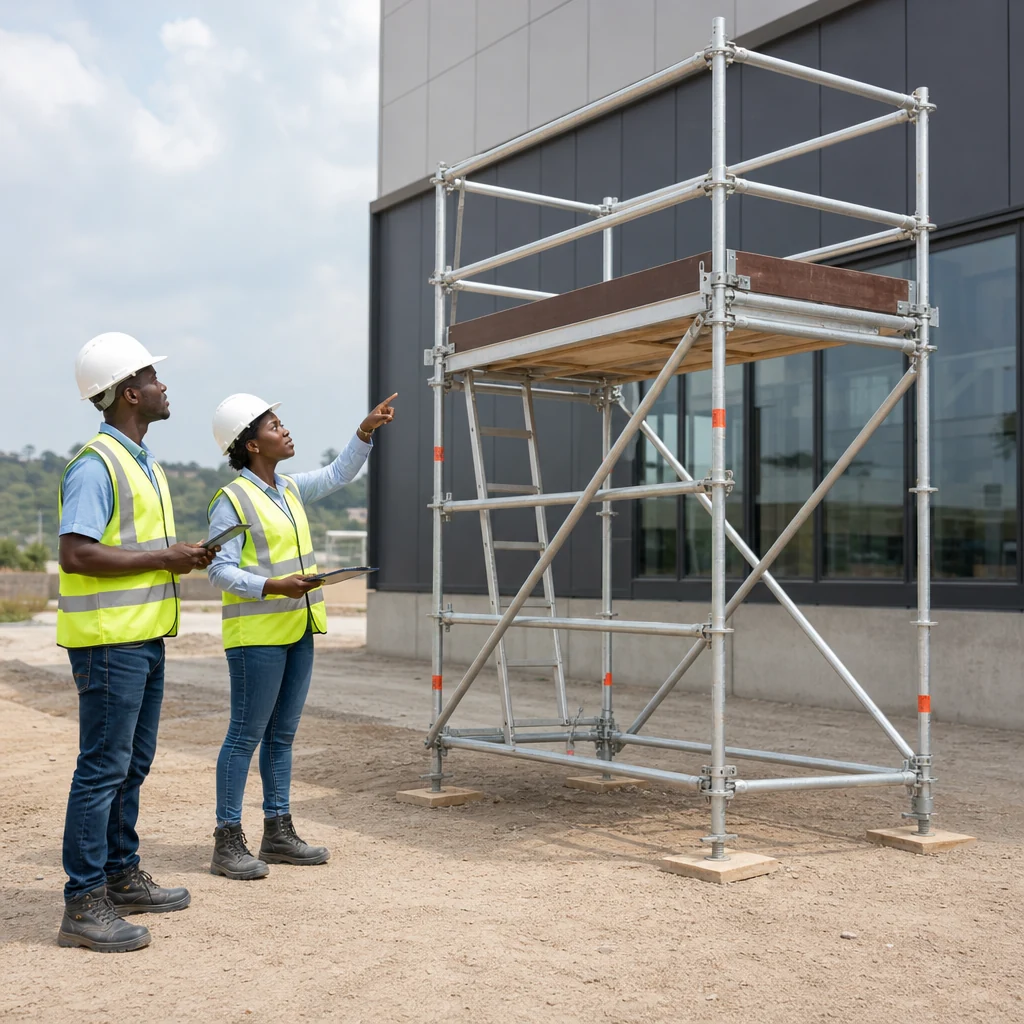
Scaffolds need competent erection, alteration and inspection. Check the foundation, ties or stabilisers, platform, guardrails, toe boards and safe access as appropriate to the design. Do not remove protective components to make a task easier. A tag or inspection record does not remove the need to notice visible defects or changed conditions.
A harness alone does not create a safe system
Personal fall-protection equipment must be selected as a compatible system for the task. Fit, inspection, anchor suitability, connection, fall clearance and the risk of striking an obstruction all matter. Do not improvise an anchor or combine components without checking compatibility.
Where fall arrest is used, prepare a practicable rescue plan and ensure trained people and suitable equipment are available. Do not assume that calling external emergency services is a complete rescue plan. This article is not a harness-fitting or rescue procedure.
Protect people below and respond to changing conditions
Control falling tools and materials, provide appropriate exclusion zones and coordinate work happening underneath. Check for fragile surfaces, openings and nearby electrical conductors. Stop when wind, rain, lightning, poor visibility or other conditions make the work unsafe; use equipment-specific limits rather than a universal weather threshold.
Practical example: changing lighting in a warehouse
A worker plans to carry a fitting up a ladder and work above an active aisle. The assessment first considers whether the fitting can be serviced from ground level. If not, a suitable guarded access platform, a controlled work zone and an agreed equipment-isolation arrangement may provide a safer method than balancing on a ladder.
Plan safer elevated work with SQMI
Explore SQMI working-at-height training and risk assessment training. Ask admissions about appropriate learning options for your role or team.
Discuss your working-at-height training needs.
Quick checklist
- Can the job be completed from ground level?
- Is the selected equipment suitable, inspected and stable?
- Are edges, openings and fragile areas controlled?
- Are people below protected from falling objects?
- Are weather limits, supervision and any required rescue arrangements clear?
Common questions
- Does work at height only matter above two metres?
- No. Assess any situation where a fall could cause injury, including lower platforms and openings. Do not use an assumed height threshold as permission to ignore risk.
- Are ladders banned?
- No. They can be appropriate when the task and risk assessment justify them and the equipment is used correctly. They are not a universal solution for all elevated work.
- Does wearing a harness mean I am protected?
- Not by itself. Protection depends on the complete system, correct use, suitable anchorage, available clearance and planned rescue where needed.
Sources and further reading
This article is general guidance for awareness. Apply it through your own site-specific risk assessment and the laws and standards that apply where you work.