What happened on the Mississippi River?
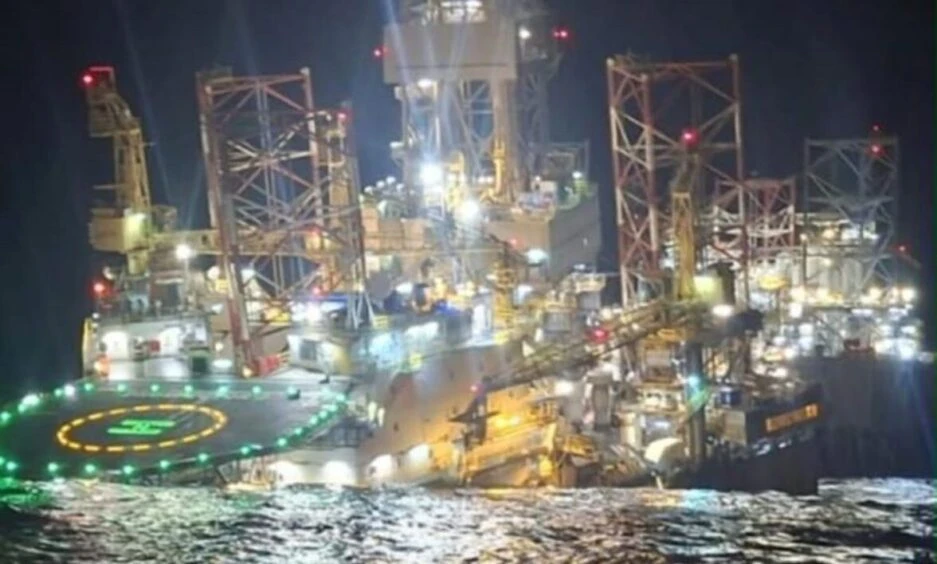
American Heritage, operated by American Cruise Lines, had docked approximately two hours before the collision for passengers to disembark. Atlantic Asphalt struck the stationary riverboat, which subsequently listed, capsized and became largely submerged.
Passengers began leaving the vessel after the impact, but the worsening list complicated the evacuation and people entered the river. Emergency services, the U.S. Coast Guard and nearby vessels participated in the rescue. The absence of reported fatalities does not diminish the seriousness of the injuries or the risks faced by passengers, crew and responders. [1][2]
Officials said everyone aboard had been accounted for, with no fatalities reported. ABC News, quoting local officials, reported that 32 people were hospitalised, including two police officers involved in the rescue. These figures describe the reports available during preparation of this article, not a final casualty assessment. [1]
Investigators recover the tanker’s voyage data recorder
The National Transportation Safety Board and U.S. Coast Guard are investigating. Reporting published by WVUE on 15 November states that investigators recovered Atlantic Asphalt’s voyage data recorder. Such recordings can help reconstruct vessel movements and bridge communications before a collision. [3]
Coast Guard officials referred publicly to a possible loss of steering. That is a preliminary line of inquiry, not an established root cause. The evidence must determine what failed, what warnings were available and how the vessel and port response developed.
It would be premature to attribute this incident to poor maintenance, crew negligence, fatigue or a particular regulatory breach. Those conclusions require evidence and investigation findings.
SQMI safety analysis: a docked vessel remains exposed to moving traffic
A vessel does not become free of collision risk simply because it is alongside a berth. Passenger operations take place within a wider system of vessel movements, navigation controls, port communications and emergency arrangements.
For port and passenger-vessel operators, a credible risk assessment should consider the consequences of another vessel losing manoeuvrability nearby. Berth suitability, passing traffic, locally applicable navigation restrictions, communication arrangements and the availability of tug assistance should be assessed by competent maritime personnel.
These are risk-control considerations, not findings that any particular safeguard was absent in New Orleans.
Evacuation plans must account for a vessel that is listing
An evacuation route available immediately after an impact may become unusable as a vessel changes angle or settles in the water. A shore gangway cannot be assumed to remain accessible throughout an emergency.
Operators should test how their approved emergency arrangements address:
- Rapid communication between the bridge, crew, terminal and emergency services.
- Loss of an intended escape route or access to the shore.
- Assistance for passengers with reduced mobility.
- Access to suitable lifesaving equipment under deteriorating conditions.
- Accurate passenger and crew accounting across separate rescue locations.
Drill safely within approved procedures
Drills should test these conditions within the vessel’s approved procedures, without exposing participants to unnecessary danger. General HSE training does not replace mandatory maritime qualifications or vessel-specific competence.
Protecting rescuers and controlling the recovery operation
A successful rescue can still injure responders. Incident command must continuously reassess vessel movement, unstable access, entrapment hazards, work near water and the limits of available rescue resources. Protective equipment, competent rescue teams and clear withdrawal criteria remain essential.
The recovery phase presents a different set of risks. WVUE reported preparations to remove fuel and that salvage could take weeks. Fuel removal, diving and lifting operations require specialist planning, exclusion zones and pollution-prevention arrangements. Fuel aboard a damaged vessel is a hazard to manage; it is not, by itself, proof that a spill occurred. [3]
Operational lessons for ports in Cameroon and West Africa
For organisations working around Douala, Kribi and other African ports, the practical task is to review their own exposure: where people board or leave vessels, how nearby movements are coordinated, and how crews, terminal teams and emergency services would respond to a loss of vessel control.
Local conditions, vessel types and legal requirements differ. The New Orleans incident should inform a site-specific review, not be used to assume that the same circumstances exist at another port.
SQMI’s position: treat passenger safety, worker protection and emergency coordination as connected operational responsibilities. Record deficiencies identified during reviews and drills, assign corrective actions and verify that they are closed.
Further updates
SQMI will communicate further verified information about the American Heritage collision through the Safety Hub as investigation updates become available. Any revised facts or substantive corrections will be identified in the article.
Safety and Quality Management Institute is committed to promoting the health and safety of workers around the world.
Quick checklist
Sources and further reading
- [1] ABC News — All rescued from capsized New Orleans riverboat in tanker collision; updated 14 November 2026
- [2] AFP — Tanker hits docked river cruise boat in New Orleans, but no fatalities; 14 November 2026
- [3] WVUE / FOX 8 — NTSB investigators recover data recorder from tanker after New Orleans cruise ship crash; 15 November 2026
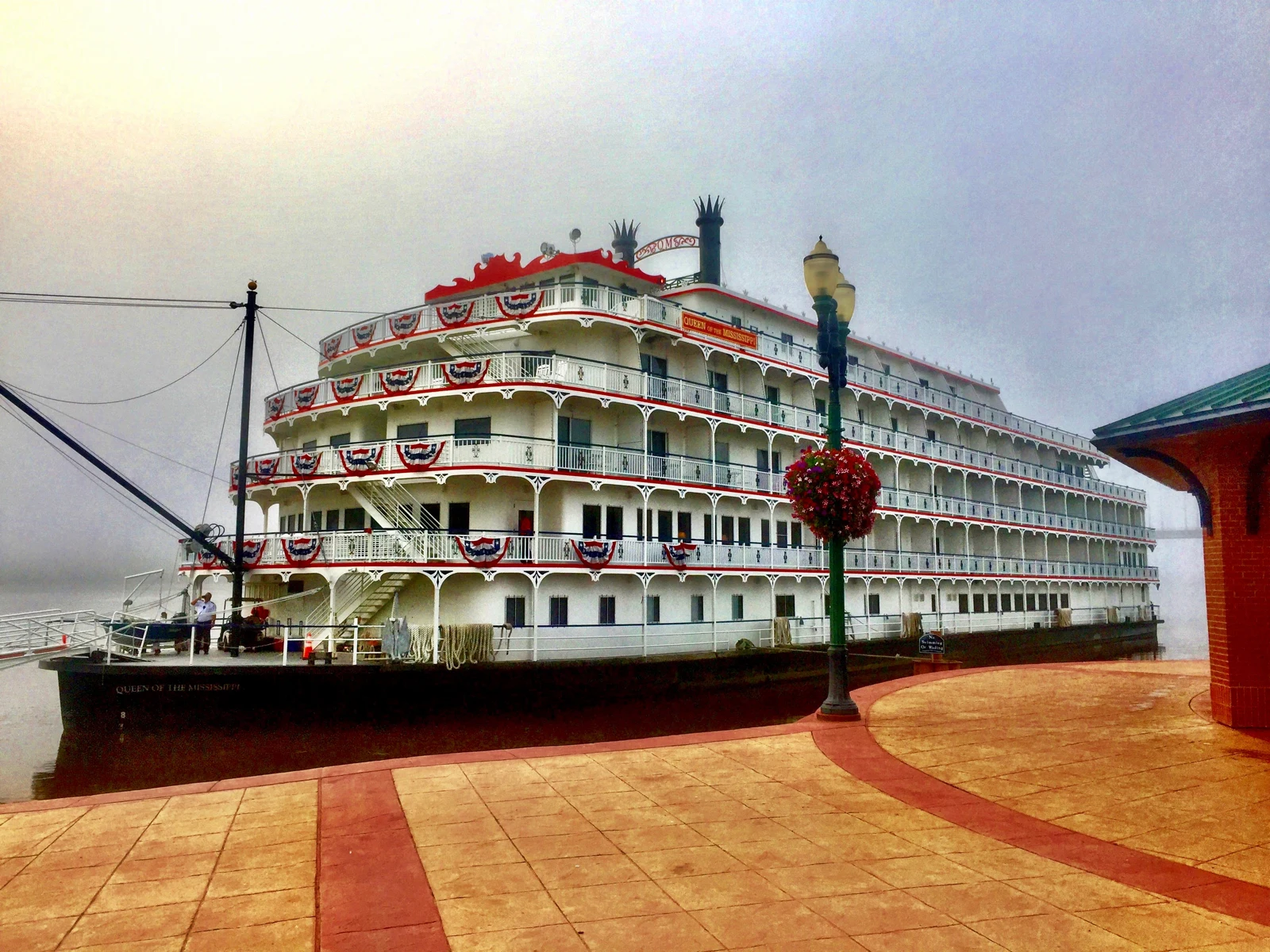
- Archive image — Benroethig, Queen of the Mississippi at Dubuque, 3 August 2016; original photograph and attribution
- Image licence — Creative Commons Attribution-ShareAlike 4.0; applies to the resized WebP adaptation
This article is general guidance for awareness. Apply it through your own site-specific risk assessment and the laws and standards that apply where you work.